Why Your 'Easy' Training Runs Feel Anything But Easy During Half Marathon Training
Quick Answer: Easy runs feeling unexpectedly hard during half marathon training is most often a sign of accumulated training fatigue from your overall weekly volume, not a fitness regression — this is a normal and expected part of a properly loaded training block, and it typically resolves with a scheduled easier or rest week.
The pace on paper is genuinely easy for you, and yet lately it feels like a grind from the first mile — that mismatch between labeled effort and felt effort is telling you something real about your training load.

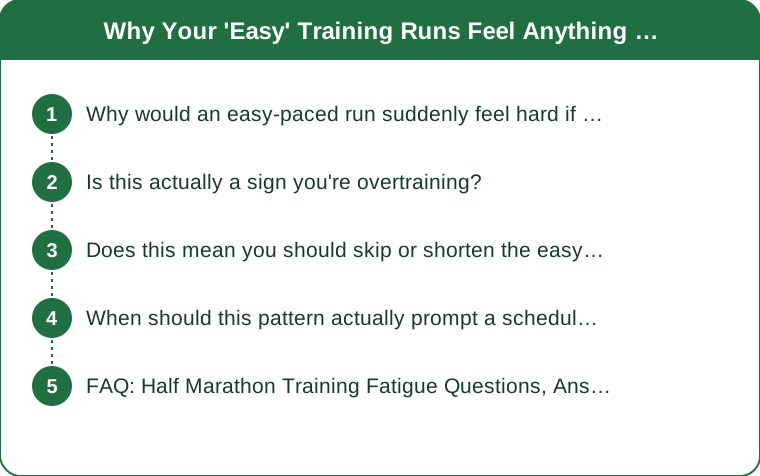
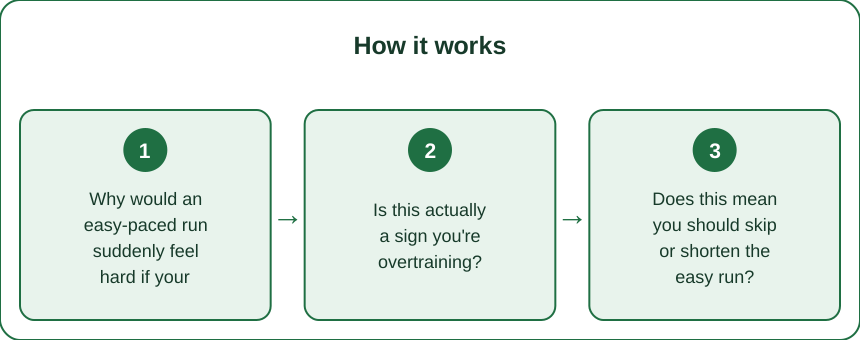
Why would an easy-paced run suddenly feel hard if your fitness hasn’t changed?
Cumulative training fatigue from your total weekly mileage and harder workout days accumulates across a training block, meaning your body is running the ‘easy’ pace on top of unresolved fatigue from previous sessions rather than from a fully rested state — this raises perceived effort even though the pace itself hasn’t changed.
Is this actually a sign you’re overtraining?
Not necessarily — some accumulated fatigue during a structured training block is expected and even intentional, since it’s part of how the body adapts and gets stronger. It becomes a concern specifically when it’s paired with declining performance across multiple weeks, disrupted sleep, or elevated resting heart rate, rather than an occasional hard-feeling easy run.

Does this mean you should skip or shorten the easy run?
Not automatically — easy runs serve a specific recovery and aerobic-building purpose regardless of how they feel that day, and running them at the prescribed easy effort (even if it feels harder than usual) still serves the intended purpose. What matters is not turning a hard-feeling easy run into an accidentally faster, harder session by pushing pace to compensate for how it feels.
When should this pattern actually prompt a schedule change?
If nearly every run — easy and hard — feels consistently harder than expected across 2+ weeks, combined with fatigue, poor sleep, or irritability, that combination suggests it may genuinely be time for a deload or easier week rather than pushing through the full planned volume.
FAQ: Half Marathon Training Fatigue Questions, Answered
How often should a half marathon training plan include an easier recovery week?
Most structured plans build in a lighter week every 3-4 weeks specifically to manage this kind of accumulated fatigue before it becomes a problem.
Should you go by pace or by feel on ‘easy’ training days?
Many coaches now recommend going primarily by perceived effort (should feel conversational) rather than a fixed pace number, since fatigue naturally shifts what pace feels easy day to day.
Is a consistently elevated resting heart rate during training a useful warning sign?
Yes — a resting heart rate noticeably elevated above your normal baseline over several days is one of the more reliable objective signs of accumulated fatigue needing attention.
TL;DR:
- Easy runs feeling hard usually reflects accumulated training fatigue, not lost fitness
- Some accumulated fatigue during a real training block is normal and even intentional
- Push through the prescribed easy effort rather than compensating by running faster
- A pattern across 2+ weeks combined with poor sleep or fatigue is the real signal to schedule a deload
The label ‘easy’ was never a promise about how it would feel every single day — just what it’s supposed to accomplish.
Keep Reading
This article is for general informational purposes only and is not medical advice. Always consult a qualified health professional for guidance specific to you.