Why You Feel Sluggish, Not Energized, During Half Marathon Taper Week
Quick Answer: Feeling sluggish rather than energized during taper week is a well-documented, normal phenomenon — reduced training volume temporarily lowers circulating adrenaline and can leave legs feeling flat or heavy for the first several taper days before the recovery benefits (glycogen restoration, muscle repair) fully show up closer to race day.
Runners expect taper to feel like an immediate energy boost, and when it initially feels like the opposite, many worry something is wrong with their fitness or that they’ve lost conditioning — usually neither is true.

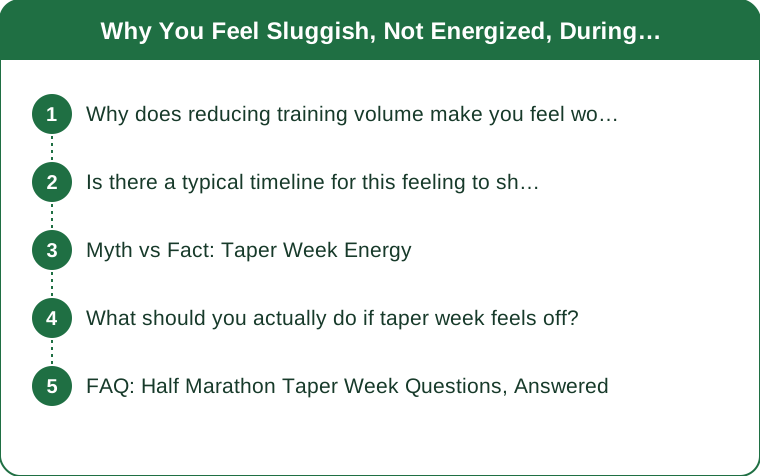
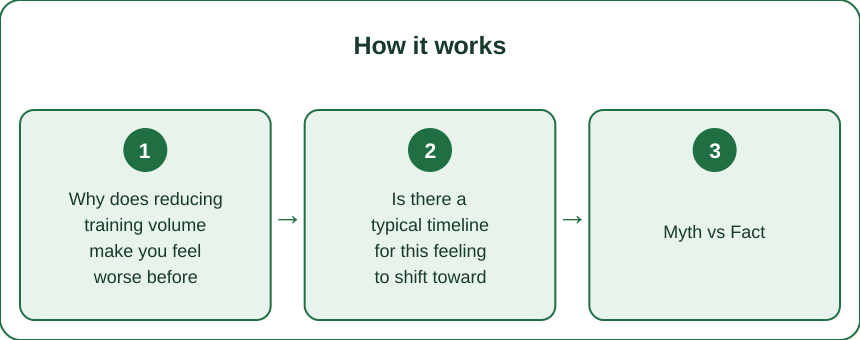
Why does reducing training volume make you feel worse before better?
Regular hard training keeps the body producing elevated levels of certain stress hormones and maintains a kind of trained-in momentum; when volume drops suddenly during taper, this adjustment period can create a temporary feeling of flatness or heaviness, sometimes called “taper funk” among runners and coaches. This typically resolves within the first several days as the body adjusts to the new lower training load and the actual physiological recovery benefits — replenished glycogen stores, repaired muscle tissue, reduced accumulated fatigue — start to outweigh the adjustment discomfort.
Is there a typical timeline for this feeling to shift toward feeling fresh?
Most runners report the sluggish or flat feeling is most pronounced in the first 3-5 days of a taper, then shifts toward feeling genuinely fresher and more energized in the final days leading into race day, once the body has fully adapted to reduced volume and glycogen stores are topped off. This isn’t universal in exact timing, but the general pattern (dip first, then genuine freshness) is common enough to be well-documented in distance running literature.

Myth vs Fact: Taper Week Energy
Myth: Feeling sluggish during taper means you’re losing fitness. Fact: Fitness gains from months of training don’t disappear in one to two weeks of reduced volume — the flat feeling is a temporary hormonal and psychological adjustment, not a fitness loss.
Myth: You should add an extra hard workout if taper feels too easy or you feel oddly tired. Fact: Adding intensity during taper specifically to “feel better” undermines the recovery the taper is designed to provide and can leave you more fatigued on race day, not less.
Myth: Everyone feels amazing and energized throughout the whole taper. Fact: The experience varies widely — flat, restless, sluggish, and anxious are all commonly reported taper experiences, not just the energized feeling that’s more commonly discussed.
What should you actually do if taper week feels off?
- Trust the plan rather than adding volume or intensity to chase a better feeling — the dip is usually temporary and self-resolving
- Keep easy runs genuinely easy during this period, since running them too hard defeats the taper’s purpose and can extend the flat feeling
- Prioritize sleep and hydration during taper week specifically, since these support the recovery processes taper is designed around
- Expect the shift to happen closer to race day, often in the final 2-3 days, rather than immediately at the start of the taper
FAQ: Half Marathon Taper Week Questions, Answered
Is it normal to feel restless or anxious rather than tired during taper?
Yes — psychological taper effects (restlessness, race anxiety, feeling like you should be doing more) are just as commonly reported as physical flatness, and both are considered a normal part of the taper experience.
Should nutrition change during taper week to help with the sluggish feeling?
Maintaining consistent, adequate carbohydrate intake supports the glycogen restoration that taper is partly for — this isn’t about eating more overall, but not under-fueling during a lower-mileage week.
How do I know if the sluggishness is taper-normal versus a sign of overtraining or illness?
Taper-related flatness typically doesn’t come with other symptoms like fever, unusual soreness beyond normal training aches, or symptoms lasting well past race day — persistent or worsening symptoms are worth checking with a doctor rather than assuming taper is the explanation.
TL;DR:
- Feeling flat or sluggish in the first days of taper is a well-documented, normal adjustment, not a fitness loss
- The shift toward feeling genuinely fresh typically happens closer to race day, not immediately
- Adding extra hard training to chase a better feeling undermines the recovery taper is designed to provide
- Restlessness and anxiety are just as normal a taper experience as physical flatness
Keep Reading
This article is for general informational purposes only and is not medical advice. Always consult a qualified health professional for guidance specific to you.