The Half Marathon Taper Week Mistakes That Undo Months of Training
Quick Answer: The most common half marathon taper mistakes are cutting mileage too drastically, adding new activities or intense workouts during taper, and under-fueling while training volume drops. A proper taper reduces volume by roughly 40-60% over 1-2 weeks while keeping some intensity, not just resting completely.
Months of consistent training can get undercut by a poorly managed final 10-14 days. Taper week isn’t about doing less across the board — it’s about reducing the right things while keeping others steady.

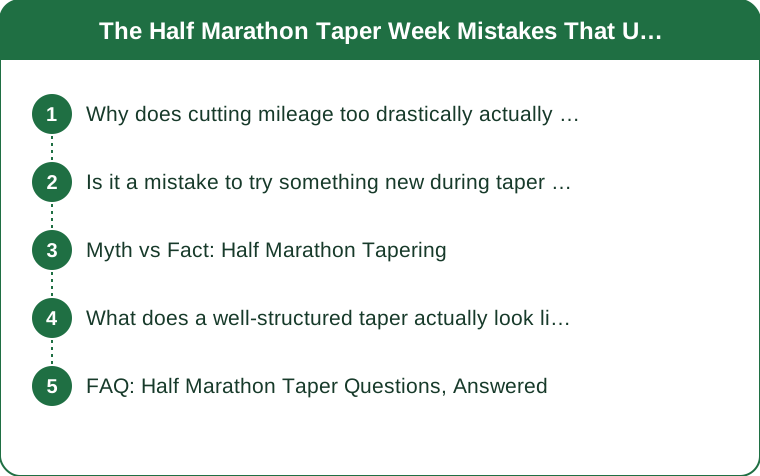
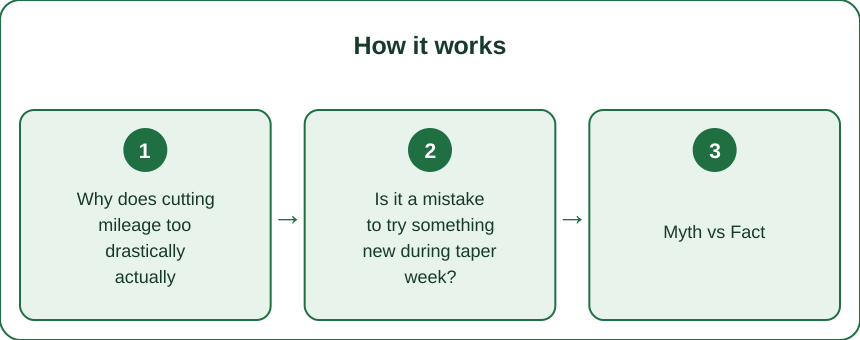
Why does cutting mileage too drastically actually backfire?
A sudden, steep drop in volume can leave legs feeling flat, heavy, or sluggish on race day rather than fresh — the body responds better to a gradual reduction (roughly 20-30% cut in the first taper week, another 20-30% in the final week) than an abrupt stop.
Some runners mistake ‘tapering’ for ‘resting completely,’ which often leaves them undertrained-feeling on race morning despite months of solid base building.
Is it a mistake to try something new during taper week?
Almost always, yes. New shoes, new foods, new stretching routines, or a completely new rest schedule introduced during taper week removes the predictability your body has adapted to over training — even well-intentioned ‘improvements’ can introduce unexpected soreness, digestive issues, or sleep disruption right before race day.
Taper week is for sticking with what’s already worked in training, not experimenting with anything new, however minor it seems.

Myth vs Fact: Half Marathon Tapering
Myth: Complete rest for the final week is the safest approach. Fact: Total rest can leave legs feeling stale — most coaches recommend keeping some easy running and a bit of race-pace work, just at reduced overall volume.
Myth: Taper week is when you should also cut calories since you’re running less. Fact: Under-fueling during taper is a common mistake — your body is still recovering and building glycogen stores for race day, and cutting calories to match lower mileage can leave you depleted.
Myth: If you feel great during taper, you should squeeze in one more hard workout. Fact: Feeling good during taper is the expected result of reduced volume, not a sign you should test fitness with a hard effort that risks fatigue or injury right before race day.
What does a well-structured taper actually look like?
Typically 10-14 days out, reduce weekly mileage by roughly 20-30%, keeping one shorter session at goal race pace to maintain neuromuscular sharpness. In the final week, reduce volume further (another 20-30% cut) while keeping easy runs frequent but short, plus a very short shakeout run 1-2 days before the race.
Sleep and fueling should stay consistent or even slightly increase relative to reduced training load, supporting glycogen and recovery rather than cutting back alongside mileage.
FAQ: Half Marathon Taper Questions, Answered
Should I stop strength training completely during taper?
Most coaches recommend reducing volume and intensity but not eliminating it entirely — light maintenance sessions can continue until 3-4 days out.
Is feeling antsy or restless during taper normal?
Very common — reduced training volume after months of consistent output often creates restless energy; light cross-training or a short easy run can help without undoing the taper’s benefit.
How much should I cut mileage in the final week before race day?
A common structure is roughly 40-60% total volume reduction compared to peak training week, spread across the final 10-14 days rather than a single abrupt cut.
TL;DR:
- Cut mileage gradually (20-30% per week) rather than abruptly stopping training volume
- Avoid any new shoes, foods, or routines during taper — stick with what’s already worked
- Keep fueling and sleep consistent or increased, even as training volume drops
- A well-structured taper keeps some easy running and race-pace work, not total rest
Taper week rewards restraint and consistency, not last-minute experiments or complete shutdown.
Keep Reading
This article is for general informational purposes only and is not medical advice. Always consult a qualified health professional for guidance specific to you.