Half Marathon Race Week: The Seven-Day Nutrition Plan
Quick Answer: Days seven through four: eat normally, hydrate consistently, and let the taper do its work. Days three and two: shift the plate toward carbohydrate - roughly 60 to 70 percent of intake from rice, potatoes, oats, bread, and fruit - while easing off fiber-heavy and fatty foods. Day one: familiar carb-forward meals, an early normal-sized dinner, nothing experimental. Race morning: 300 to 500 calories of practiced breakfast two to three hours out, plus your usual coffee. The rule above all rules: nothing new in race week - not foods, not gels, not gear.
Race week nutrition is where months of disciplined training meet one giant plate of last-minute panic pasta. The physiology is actually simple - a half marathon needs topped-up fuel stores, a calm gut, and normal hydration - and every one of those is won by being boring.

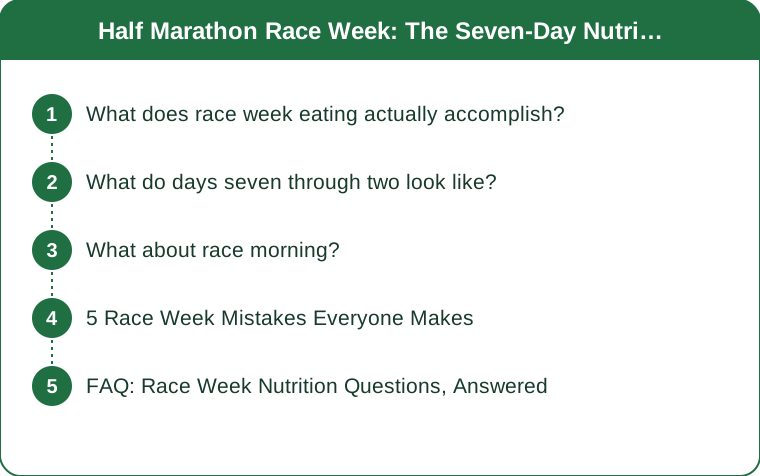
What does race week eating actually accomplish?
Three jobs, none of which involve gaining fitness.
Job one: topping off glycogen. Your muscles and liver store carbohydrate as glycogen - the primary fuel of race pace - and a half marathon draws those stores down hard, though not to the total depletion a full marathon threatens. Arriving with full tanks pushes the late-race fade further away, and full tanks are achieved with one to two days of carb emphasis on rested legs, not a week of double portions. The taper itself does half the loading: training volume drops while eating stays steady, so surplus glycogen accumulates naturally.
Job two: a calm, practiced gut. Race-day GI trouble is the most preventable DNF-maker in distance running, and it is almost always seeded in race week - a new restaurant, a fiber bomb, an untested gel, a spicy send-off dinner. The gut wants familiarity above all; race week is its greatest-hits tour, not its experimental phase.
Job three: normal hydration, not heroic hydration. Starting the race euhydrated - normal fluid balance, pale-straw urine - beats both a dry week and the over-drinking that dilutes electrolytes. Hydration is a all-week habit with a modest race-morning top-up, not a gallon challenge at the expo.
And one anti-job worth naming: race week cannot add fitness. The training is banked; extra miles now only withdraw from it. The runner who treats race week as maintenance - normal food, easy legs, good sleep - beats the one optimizing frantically, every time. Weight will tick up a pound or two with glycogen and its stored water; that is the loading working, and it is fuel, not fat.
What do days seven through two look like?
A calendar, not a crisis.
Days seven to four: normal, deliberately. Your usual meals, usual portions, usual coffee. Protein stays steady to support taper recovery; vegetables and fiber stay normal this early. The taper means fewer calories burned, and the correct response is eating to appetite rather than slashing - under-fueling the final week to stay light is the classic self-sabotage. The one active assignment: consistent water habit, and modest alcohol at most, since it disrupts the sleep you are trying to bank.
Days three and two: the actual carb shift. Rebuild the plate: two-thirds carbohydrate, modest protein, lighter fat. In food terms - oatmeal with banana at breakfast; rice, potatoes, or noodle bowls at lunch and dinner; bread, pretzels, fruit, and low-fat yogurt as snacks. Total calories stay near normal; the sourcing changes. Simultaneously ease down the gut-challengers: giant raw salads, beans and cruciferous mountains, very high-fiber cereals, greasy and fried things. White rice and white bread - usually the nutritional villains - are precisely the point this week: fast, gentle, storable fuel.
Day one - the day before: familiar and front-loaded. Make lunch the substantial meal and keep dinner normal-sized, early, and famously boring - the classic combinations exist for a reason: rice with chicken, pasta with simple sauce, potatoes with salmon. The pasta-mountain night-before is the tradition science quietly retired: a huge late dinner sits in the gut at the start line, while the real loading happened on days three and two. Salt food normally (those electrolytes matter in August heat), sip fluids through the day, and stop major eating three-ish hours before bed.
And lay out everything that is not food: the bib, the tested shoes, the high-waisted leggings or shorts that survived every long run - race week is also where wardrobe experiments go to cause chafing, and the nothing-new rule covers fabric as fully as fuel.

What about race morning?
Scripted to the minute, rehearsed in training.
Timing: eat two to three hours before the gun. That window lets breakfast clear the stomach while topping liver glycogen - the store that drains overnight and fuels your brain’s pacing decisions. A 7 a.m. start means a 4:30 to 5:00 alarm breakfast; unpleasant, and universally worth it.
The menu: 300 to 500 calories of practiced, low-fiber carbohydrate. The proven classics: oatmeal with banana and honey; toast or a bagel with peanut butter and jam; white rice with an egg. Modest protein and fat are fine passengers; fiber and grease are not. The single qualifying criterion is that this exact breakfast preceded your long runs - race morning is the graduation of a rehearsed meal, never an audition.
Coffee: yes, if you are a coffee person. Caffeine is a legitimate, well-supported performance aid, and your usual morning cup also keeps the other morning routine on schedule - valuable before a start-line porta-potty line. The rule is your usual dose; race morning is not the day to discover what a triple shot does.
The final ninety minutes: sips, not chugs. A cup or two of water or sports drink up to 60 to 90 minutes out, then small sips only. A modest final top-up - a few sips or half a gel ten minutes before the gun - suits runners who practiced it.
Mid-race fuel gets decided now, not at mile eight. For efforts beyond roughly 90 minutes, 30 to 60 grams of carbohydrate per hour - one to two gels or chews, started around 40 to 50 minutes in - measurably defends the late miles. Every product and timing rehearsed on long runs; course-table mystery gels are for the brave and the foolish, who are the same person at mile ten.
Nerves footnote: pre-race jitters suppress appetite and speed the gut - normal, and another argument for the early, liquid-friendly, practiced breakfast.
5 Race Week Mistakes Everyone Makes
1. The giant pasta dinner the night before. The loading window was days three and two; the eve-of feast just sits heavy at 4 a.m. Tradition earns a normal-sized pasta dinner; physiology already got what it needed earlier in the week.
2. The virtuous fiber bomb. A massive kale-bean-and-seed salad on day one is outstanding nutrition on any week that does not end in a half marathon. Race week fiber discipline is temporary, targeted, and reversed the moment you finish - Sunday brunch can be all the roughage you like.
3. Debuting anything. A new gel flavor from the expo, a new sports drink, new anti-chafe balm, the cute new race outfit - each is a variable added at maximum stakes. The expo is for browsing; the race is run entirely in rehearsed choices, from breakfast to the leggings that already have a hundred miles of proof on them.
4. Over-drinking plain water. Nervous sipping all day Saturday plus chugging at every mile-one water stop dilutes sodium exactly when sweat is spending it - the over-hydration failure mode is real and, in hot August starts, meaningful. Drink to a schedule and thirst, keep electrolytes in the rotation, and trust that pale-straw urine, not clear, is the target.
5. Skipping breakfast from nerves. Racing 13.1 on an empty liver is a negotiation with the wall you scheduled yourself. If solid food will not go down at 4:45, the liquid tier - a smoothie, sports drink, a banana - is the practiced fallback, which of course means practicing it.
Bonus: crash-experimenting with supplements. Race week is not the moment for a first beet-juice loading protocol or a new magnesium regimen. If it was not in training, it is not in the race.
FAQ: Race Week Nutrition Questions, Answered
Do I really need to carb load for a half marathon?
A moderate version, yes - one to two days of carb-emphasized eating (roughly 60 to 70 percent of intake) tops off glycogen meaningfully for a 13.1-mile effort. The full multi-day protocols marathoners use are unnecessary, and the pasta-mountain eve-of dinner is theater. Normal calories, re-sourced toward rice, potatoes, oats, and bread on days three and two, does the entire job.
What is the best breakfast before a half marathon?
The one you rehearsed before long runs: 300 to 500 calories of low-fiber carbohydrate two to three hours pre-start - oatmeal with banana, toast or bagel with peanut butter, white rice with an egg. Add your usual coffee if you drink it. The formula matters less than the rehearsal; race morning auditions are how sub-two goals meet porta-potties.
Should I take gels during a half marathon?
If you will be out longer than about 90 minutes, planned carbs - 30 to 60 grams per hour, typically one to two gels started around 40 to 50 minutes in - measurably protects the final 5K. Faster runners can race on breakfast alone. Either way, the decision and the exact products get settled and practiced during training long runs, never invented on the course.
What if I have a nervous stomach on race morning?
Go earlier and more liquid: a smoothie or sports-drink-plus-banana breakfast three hours out digests through jitters better than solid food, and your practiced coffee keeps the morning system on schedule. Skip the fiber and grease entirely from day one onward, arrive early enough for a calm bathroom visit, and remember that start-line butterflies burn off within the first mile - the breakfast has to outlast them, not beat them.
TL;DR:
- Days 7-4: normal eating, steady water, banked sleep. Days 3-2: plates shift to 60-70 percent carbs, fiber eases down.
- Day before: substantial lunch, early boring normal-sized dinner - the loading already happened.
- Race morning: 300-500 practiced calories two to three hours out, usual coffee, sips after.
- Beyond 90 minutes of racing, rehearsed gels at 30-60g carbs per hour defend the last 5K.
- Nothing new in race week - food, gels, or gear; the outfit with a hundred training miles wins.
Race week is the victory lap of your discipline, not a final exam. Be boring for seven days, and mile eleven will feel like the reward it is.
See It in Motion
Seen here: Super High Waist Embossed Yoga Leggings with Inner Pocket — shop it on bubblelime.com
Keep Reading
This article is for general informational purposes only and is not medical advice. Always consult a qualified health professional for guidance specific to you.