The Half Marathon Fueling Mistakes That Have Nothing to Do With What You Actually Eat
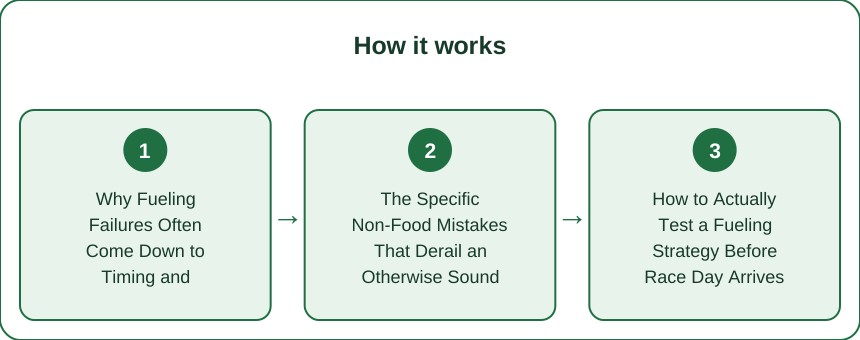
A carefully chosen race-day fueling plan — the right gel, the right electrolyte mix, the right pre-race meal — can still fail on race day for reasons that have nothing to do with the actual food or product choices themselves, since timing and lack of testing derail plans just as often as a bad food choice does. Here is why fueling failures often come down to timing and testing rather than the specific products chosen, the specific non-food mistakes that derail an otherwise sound plan, and how to actually test a fueling strategy properly before race day arrives.

Why Fueling Failures Often Come Down to Timing and Testing Rather Than Food Choice
The overlooked variables: the the-a-nutritionally-sound-fueling-choice-consumed-at-the-wrong-time-relative-to-effort-level-or-digestion-state-can-still-produce-gi-distress-or-inadequate-energy-availability-regardless-of-the-products-actual-nutritional-quality (the timing relative to effort and digestion mattering independently of what specific product is chosen, meaning even a well-formulated product can fail if timed poorly — the a-nutritionally-genuinely-sound-fueling-product-choice-consumed-at-the-wrong-specific-time-relative-to-current-effort-level-or-current-digestion-state-can-still-produce-real-gi-distress-or-inadequate-energy-availability-during-the-race-entirely-regardless-of-that-products-own-actual-nutritional-quality-or-formulation), the the-race-day-nerves-and-adrenaline-change-digestive-function-in-ways-that-a-fueling-strategy-tested-only-during-calm-low-stress-training-conditions-doesn’t-actually-account-for (the physiological differences between race-day stress and typical training conditions meaning a strategy that works in practice doesn’t automatically transfer to the actual heightened-stress race environment — the the-genuine-physiological-differences-between-actual-race-day-stress-and-adrenaline-and-typical-calmer-training-conditions-mean-that-a-fueling-strategy-that-works-fine-in-practice-under-low-stress-training-conditions-doesnt-necessarily-or-automatically-transfer-cleanly-to-the-genuinely-different-and-more-heightened-stress-actual-race-day-environment), and the reframe (the fueling-failure problem as frequently being about when and under what conditions a fueling choice gets consumed rather than which specific product was chosen — a timing-and-testing problem more often than a food-choice problem)).

The Specific Non-Food Mistakes That Derail an Otherwise Sound Plan
What actually goes wrong: the trying-a-completely-new-fueling-product-or-strategy-for-the-first-time-on-actual-race-day-rather-than-having-tested-it-repeatedly-during-training-from-the-half-marathon-fueling-guide-logic (the introducing any genuinely new element on race day itself being one of the most common and avoidable specific mistakes, regardless of how sound that new element theoretically is — the introducing-any-genuinely-new-and-previously-untested-fueling-product-or-strategy-element-specifically-on-actual-race-day-itself-rather-than-having-already-tested-it-repeatedly-during-prior-training-runs-remains-one-of-the-single-most-common-and-most-easily-avoidable-specific-race-day-mistakes-entirely-regardless-of-how-nutritionally-sound-that-particular-new-element-theoretically-is-on-paper), the the-fueling-too-close-to-the-actual-start-time-without-allowing-adequate-digestion-time-before-the-elevated-effort-and-associated-blood-flow-redirection-of-actual-running-begins (the timing pre-race fueling too close to the start without accounting for the digestion time genuinely needed before effort-related blood flow redirection away from digestion begins — the timing-any-pre-race-meal-or-fueling-intake-too-close-to-the-actual-race-start-time-without-allowing-adequate-real-digestion-time-to-pass-before-the-considerably-elevated-effort-level-and-associated-blood-flow-redirection-away-from-digestive-function-that-actual-running-effort-begins-to-cause), the the-under-fueling-during-the-race-itself-out-of-a-fear-of-gi-distress-which-often-creates-the-larger-and-more-performance-limiting-problem-of-inadequate-energy-availability-in-the-later-portion-of-the-race (the anxiety-driven under-fueling to avoid one problem often creating a larger separate problem later in the race, an overcorrection mistake distinct from poor food choice itself — the anxiety-driven-under-fueling-during-the-actual-race-itself-specifically-out-of-a-fear-of-triggering-gi-distress-quite-often-and-ironically-creates-the-considerably-larger-and-more-genuinely-performance-limiting-separate-problem-of-inadequate-energy-availability-specifically-during-the-later-and-most-demanding-portion-of-the-race), and the frame (the specific non-food mistakes as trying anything genuinely new on race day itself, fueling too close to the start without adequate digestion time, and anxiety-driven under-fueling during the race that creates a worse problem later — none of which is actually about which specific product was chosen).
How to Actually Test a Fueling Strategy Before Race Day Arrives
The practical testing protocol: the practice-the-exact-planned-race-day-fueling-timing-and-products-during-several-long-training-runs-specifically-not-just-during-easy-or-short-runs-since-the-relevant-conditions-only-show-up-under-genuine-race-like-effort (the testing under conditions that actually resemble race demands specifically, since easy short runs don’t replicate the physiological state that matters — the deliberately-practicing-the-exact-planned-race-day-fueling-timing-and-specific-products-during-several-separate-long-training-runs-specifically-rather-than-only-during-easier-or-considerably-shorter-runs-since-the-genuinely-relevant-physiological-conditions-that-actually-matter-for-testing-fueling-tolerance-only-reliably-show-up-under-genuine-race-like-sustained-effort), the the-simulate-race-morning-nerves-and-timing-as-closely-as-realistically-possible-during-at-least-one-dress-rehearsal-training-run-including-similar-wake-up-time-and-pre-run-meal-timing (the deliberately replicating race-morning conditions during at least one practice run to test the strategy under conditions closer to actual race day, not just typical training day conditions — the deliberately-attempting-to-replicate-and-simulate-actual-race-morning-conditions-including-similar-wake-up-time-and-similar-pre-run-meal-timing-as-closely-as-realistically-possible-during-at-least-one-dedicated-dress-rehearsal-style-training-run-specifically-to-test-the-planned-fueling-strategy-under-conditions-genuinely-closer-to-actual-race-day-rather-than-just-a-typical-relaxed-training-day), the the-track-and-note-exactly-what-worked-and-what-caused-any-discomfort-during-each-fueling-test-so-the-final-race-day-plan-is-based-on-actual-personal-tested-data-rather-than-general-recommendations-alone-from-the-half-marathon-race-week-guide-logic (the building a personal evidence base from actual testing rather than relying purely on general published fueling recommendations, since individual tolerance varies — the actively-tracking-and-carefully-noting-down-exactly-what-specifically-worked-well-and-what-specifically-caused-any-discomfort-during-each-individual-fueling-test-run-so-that-the-final-actual-race-day-plan-ends-up-being-based-on-real-actual-personal-tested-data-rather-than-simply-relying-on-general-published-fueling-recommendations-alone-which-dont-account-for-individual-tolerance-variation), and the frame (the practical testing protocol as practicing the exact planned timing and products during genuinely long training runs, simulating race-morning conditions during at least one dress rehearsal run, and tracking personal results to build an individually tested plan rather than relying on general recommendations alone — the actual fix for most fueling failures, since the products themselves usually aren’t the problem).
Race-day fueling failures often have nothing to do with the specific food or product chosen — a nutritionally sound choice consumed at the wrong time relative to effort level or digestion state can still cause GI distress regardless of its quality, and race-day nerves and adrenaline change digestive function in ways a strategy tested only during calm training conditions doesn’t account for. The specific mistakes that actually derail a plan are trying anything genuinely new on race day itself instead of having tested it repeatedly beforehand, fueling too close to the start without adequate digestion time before running-related blood flow redirection begins, and anxiety-driven under-fueling during the race to avoid GI distress, which often creates the larger problem of inadequate energy in the race’s later, most demanding stretch. Actually test a fueling strategy by practicing the exact planned timing and products during several genuinely long training runs rather than easy short ones, simulating race-morning conditions including wake-up and pre-run meal timing during at least one dress rehearsal run, and tracking exactly what worked and what didn’t so the final plan is based on real personal tested data rather than general recommendations alone.
Keep Reading
This article is for general informational purposes only and is not medical advice. Always consult a qualified health professional for guidance specific to you.