The Half Marathon: 13.1 — The Perfect Crazy Distance
The half marathon is distance running’s sweet spot: long enough to be a genuine achievement and require real training, short enough to train for with a job and a life. From 5K-finisher to 13.1: the plan, the long-run rules and race-day wisdom.

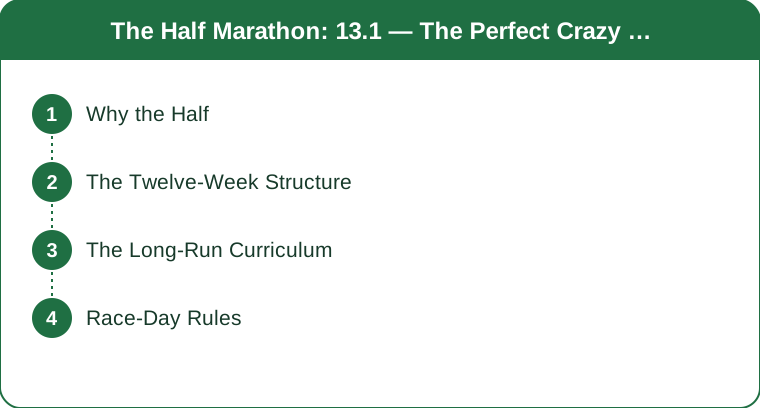
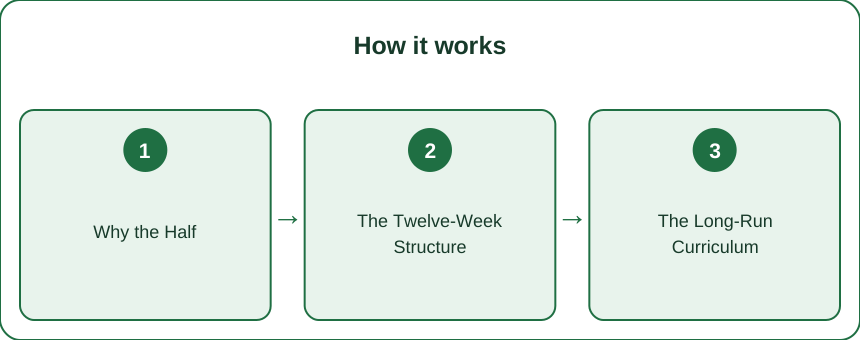
Why the Half
The distance’s case: it demands respect without demanding your life (the marathon’s 3-hour training runs and body toll versus the half’s manageable peak weeks — the half fits inside normal life), the finish is transformative (the you-just-ran-21-kilometers identity shift is the full marathon feeling at half the mortgage), and the race ecosystem is the sport’s friendliest (halves attract huge first-timer fields, generous cutoffs and the best crowd energy per kilometer). Prerequisite honesty: comfortable 5K, ideally a 10K — the C25K graduate’s natural next mountain, one bridge at a time.
The Twelve-Week Structure
The plan shape: three-to-four runs weekly — the long run (the plan’s spine, growing gently from 6-7km to 17-18km at week ten; you never run 21.1 in training and don’t need to — race-day magic covers the gap), the easy runs (most of your mileage, genuinely conversational — the slow-is-the-strategy rule scales up), the optional quality session (intervals or tempo — nice for time goals, skippable for finish goals), and the sacred cutback weeks (every third-ish week steps back — the adaptation happens in the easing, not the piling). The one rule ruling all: the 10% weekly mileage ramp, respected religiously.

The Long-Run Curriculum
What the long run teaches beyond legs: fueling practice (runs past 75-90 minutes want mid-run carbs — the gel-or-chews experiment happens in TRAINING; race day debuts nothing), hydration and kit rehearsal (the run vest or belt decision, the anti-chafe protocol at distance — every long run is a dress rehearsal), pacing discipline (the long run pace should feel almost embarrassingly easy — the discipline that saves race day), and the mental miles (the final training long-run’s confidence is the actual product; the body was ready weeks before the mind believes it).
Race-Day Rules
The first-timer commandments: nothing new on race day (shoes, breakfast, kit, gels — all veterans of training runs), start SLOWER than feels right (the adrenaline start is the classic half-marathon regret — banking time early costs triple after kilometer 16; the negative-split dream starts with a humble first 5K), use the aid stations from the first one (drinking before thirst, walking through stations is elite-approved), and the finish-line plan (the medal photo, the protein within the hour, the stairs-descended-backwards comedy of the next two days). The after: recovery week, then the question every finisher asks — faster half, or the full? Both answers are right; the identity already changed at 13.1.
Long run is the spine, cutback weeks are sacred, nothing new on race day, humble first 5K. The half marathon is the achievable epic — twelve weeks from now, the medal is math.
Keep Reading
This article is for general informational purposes only and is not medical advice. Always consult a qualified health professional for guidance specific to you.